
Beautiful and a Problem: Kerry’s Most Attractive Invasive Species
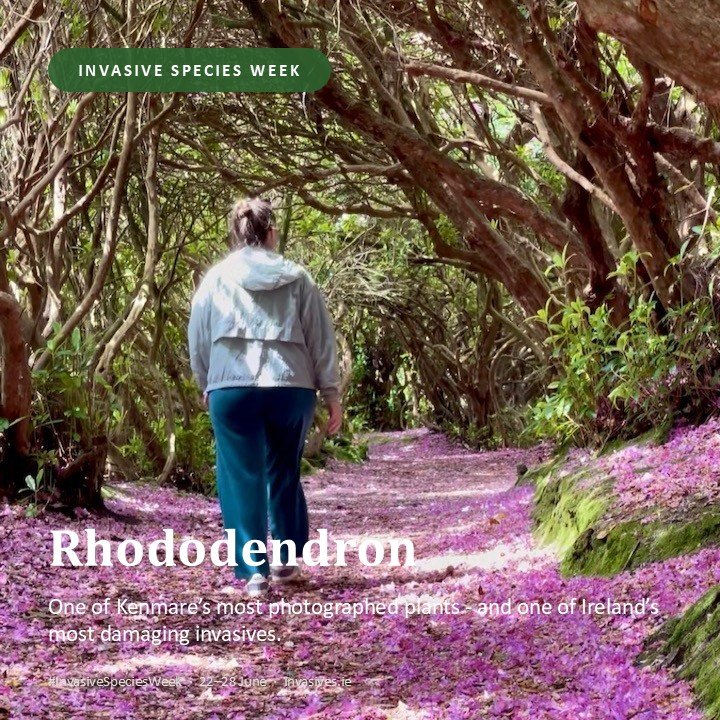
If you've walked through Reenagross in June, you'll know the spot - where the rhododendron blooms in great purple banks, where couples come for wedding photographs and visitors stop to take it all in. It is genuinely beautiful. It is also one of the most damaging invasive plants in Ireland, and the two facts sit together more often than we'd like.
This is the uncomfortable theme of Invasive Species Week (22–28 June): many of our most harmful non-native species are harmful precisely because they are attractive, easy to admire, and easy to spread. Here are a few you'll recognise around Kerry.Common cordgrass. Less showy than the rest, and the one closest to our own work. Spartina colonises open mudflat and saltmarsh, trapping sediment and turning bare feeding ground into dense grass - and it's that bare mud the godwits, egrets and other waders of Kenmare Bay depend on.
What helps. None of this means you can't enjoy these species where they are - it means not helping them spread. Never dump garden waste in the wild, which is how most plant invasives escape. If you're moving between rivers, lakes or wet sites, follow Check, Clean, Dry. And you can record what you spot at invasives.ie, where sightings feed into the national picture.
Ireland's approach is tightening, too: a new Invasive Species Bureau, formed by the National Parks and Wildlife Service and the National Biodiversity Data Centre, is now developing a national management strategy. For several of the species above - rhododendron among them - it is already an offence under Irish law to cause their spread.
Rhododendron. Rhododendron ponticum (Right) casts shade so dense that almost nothing survives beneath it, and its leaves are toxic, so nothing grazes it back. A few miles from Reenagross, in Killarney National Park, clearing it from the native oakwoods is one of the largest and most expensive conservation efforts in the country.
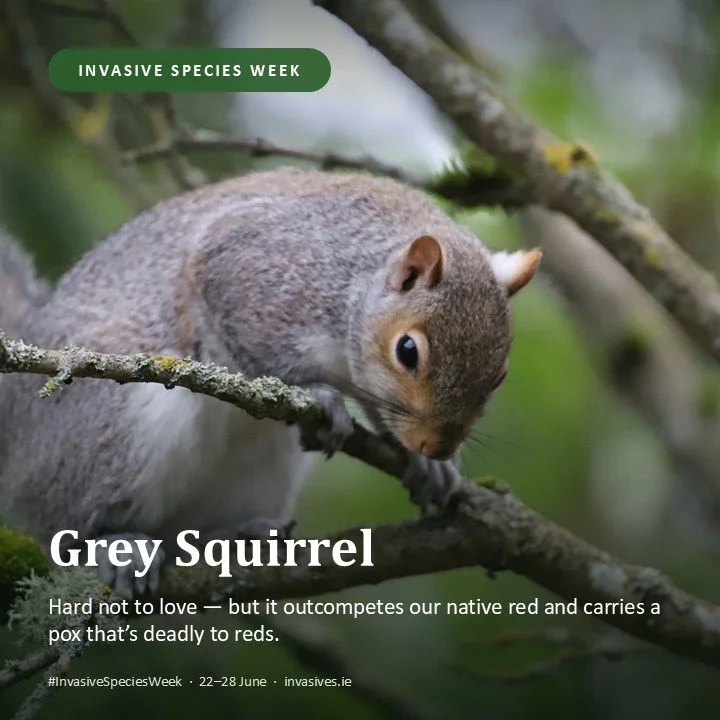
Grey squirrel. Introduced from North America, the grey outcompetes our native red squirrel and carries a pox that is lethal to reds but harmless to greys. There is hope, though: as pine marten populations recover, red squirrels are returning in places the greys had taken over.
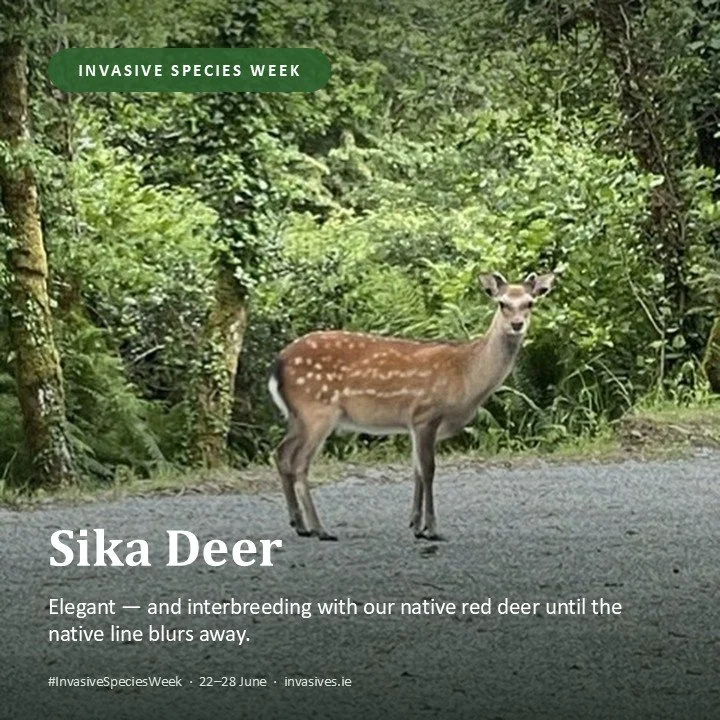
Sika deer. Brought to Killarney in the 1860s, Sika deer now interbreed with native red deer - quietly eroding one of the few genuinely native red deer populations left in Ireland.
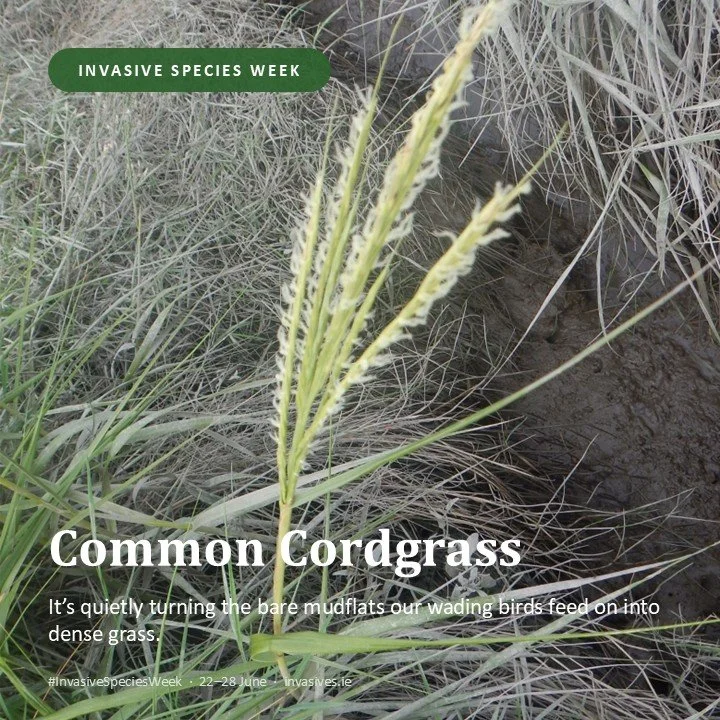
Common cordgrass. Less showy than the rest, and the one closest to our own work. Spartina colonises open mudflat and saltmarsh, trapping sediment and turning bare feeding ground into dense grass - and it's that bare mud the godwits, egrets and other waders of Kenmare Bay depend on.
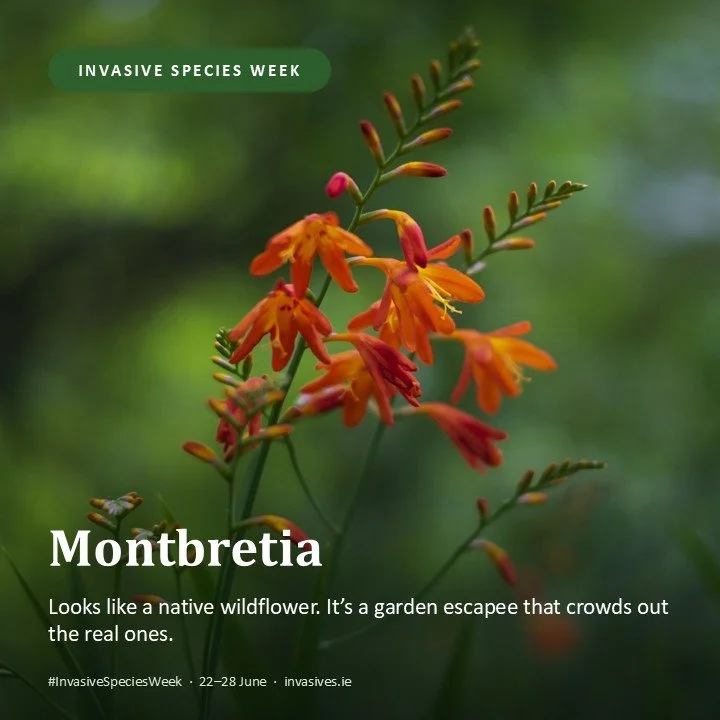
Montbretia. Those orange flowers lining the lanes every August look like a native wildflower, but they're a garden escapee that forms dense mats and crowds out the plants that belong there.